Two strands. Tools that teach pain procedures and weigh which ones deserve to be done, and the statistics and AI that make clinical measurement trustworthy.
Pain interventions
Stanford Pain Atlas
For pain medicine trainees, faculty and clinicians
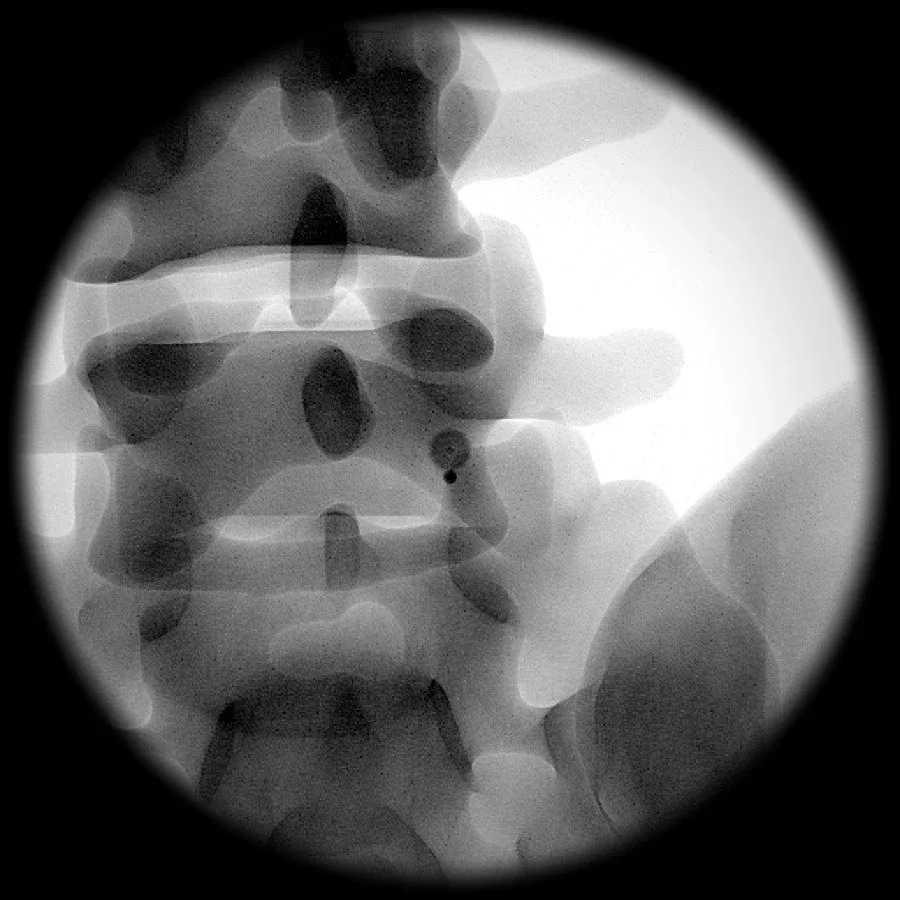
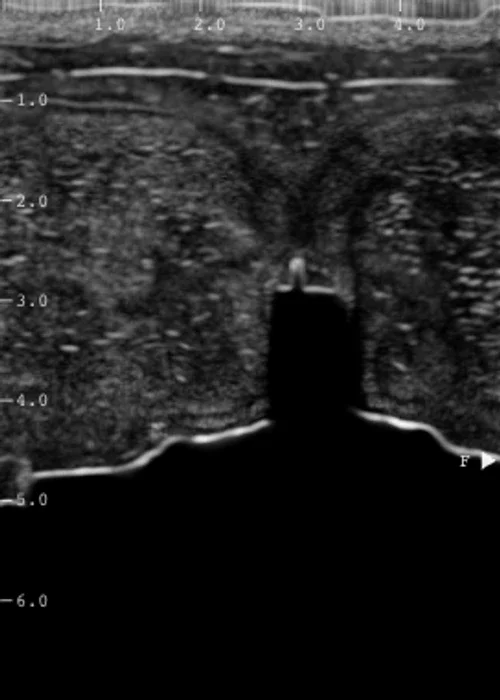
An education platform for pain medicine, led by the Interventional Pain Atlas, which offers fluoroscopy and ultrasound procedure simulation on a spine trainees can study. It also covers neuroanatomy, mechanisms, board-exam questions and a pain-science knowledge graph.
For clinicians, educators and the patients they counsel
Structured literature reviews of emerging pain interventions, turned into illustrated, bilingual (English and Traditional Chinese) guides in which every claim traces to a source. Topics include regenerative treatments, minimally invasive spine procedures, Tx360 for migraine, cryoneurolysis, pulsed radiofrequency and noninvasive neuromodulation.
Fluoroscopy and ultrasound simulated in the Stanford Interventional Pain Atlas from TotalSegmentator CT data (Wasserthal et al., Radiology: AI 2023), CC BY 4.0.
Statistics, measurement and AI
CHOIR
For pain clinics, health systems and outcomes researchers
The Collaborative Health Outcomes Information Registry, Stanford's open-source learning health system for pain. It collects NIH PROMIS patient-reported outcomes through computerized adaptive testing at the point of care, and feeds clinical care, research and quality improvement from the same data.
For clinicians, researchers and developers of clinical AI
A psychometric interpretation service for AI systems, served over the Model Context Protocol with a web app on top. Given a measure and a raw score, it returns a severity band, and a T-score and percentile only where a defensible reference population exists, saying plainly when one does not.
ESTIMAND
For AI evaluation researchers and clinical AI developers
A benchmark of grounded psychometric reasoning in language models. It tests whether a model can retrieve a measurement fact, attribute it to the study that established it, compute with it, recognize when the fact does not exist or the question is malformed, and judge whether it applies to the patient at hand.